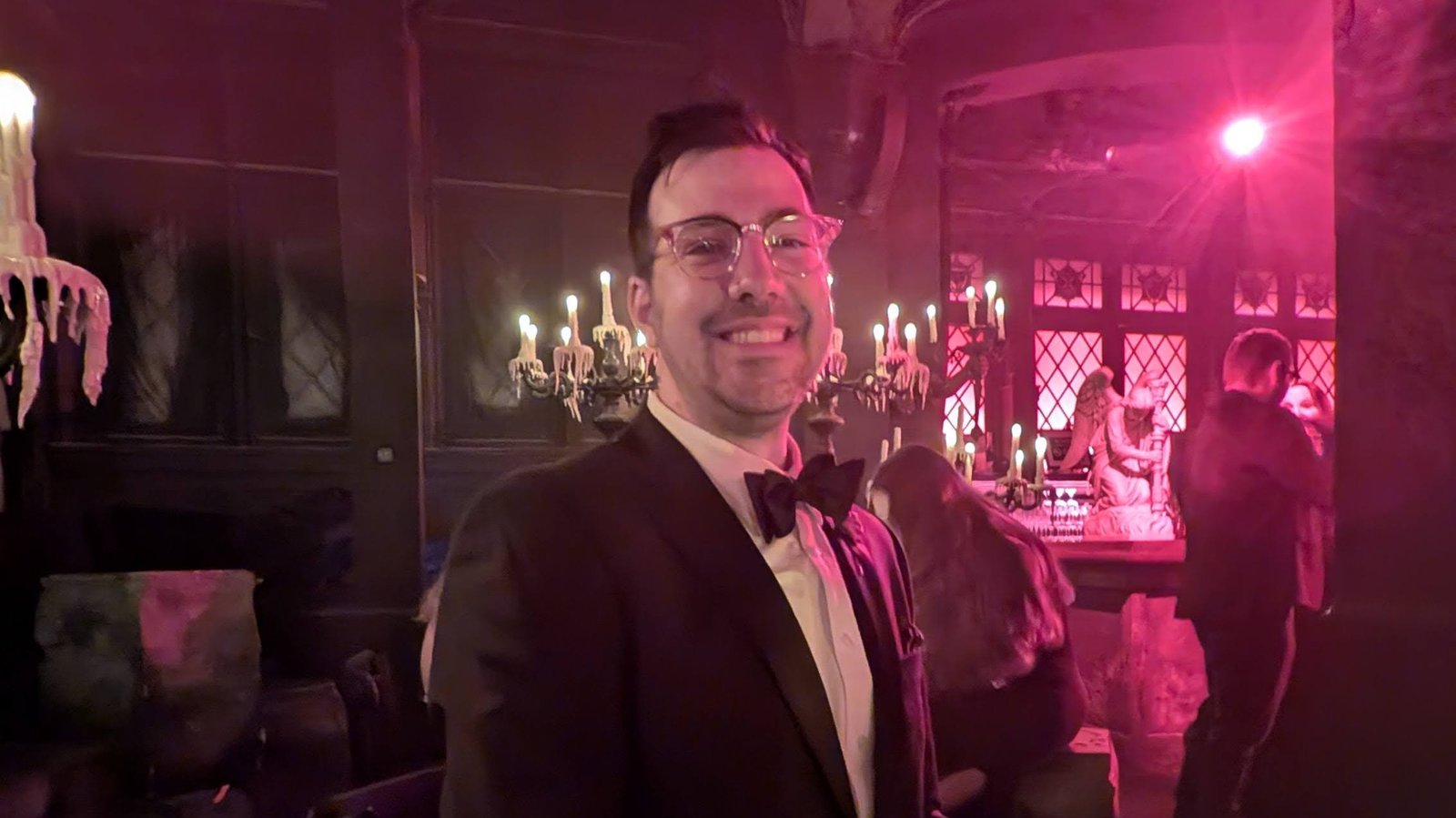
A few months ago, Baker Street Mystery owner David Scaliatine attended Masquerade NYC, one of the newest immersive theater experiences in New York City, offering a reimagined journey into the world of The Phantom of the Opera. Since The Phantom of the Opera is celebrating 40 years on stage in London, it seemed the perfect time to talk about this immersive experience.
As a company dedicated to immersive storytelling, we’re always exploring how other productions create worlds guests can inhabit. Masquerade NYC became one of the most insightful case studies we’ve encountered.
At the heart of immersive theater is a simple principle: immersion succeeds when the world acknowledges the audience’s presence. Whether through visual cues, emotional shifts, physical interaction, or narrative involvement, the environment must respond to the guest in a way that makes them feel seen. Masquerade NYC applies this principle consistently, guiding guests from observers to participants through deliberate, carefully layered design choices.

So what exactly makes this an immersive experience?
While defining immersive experiences can be a point of contention in the theater arts circle, in our point of view they go far beyond being a spectator. When you’re part of an immersive event, you’re no longer just a guest, you are a character in the world you’ve stepped inside. Unlike a traditional stage show, this Phantom of the Opera immersive experience places guests directly into the story, highlighting the growing distinction between immersive events vs interactive theater.
This article isn’t intended as a direct review of the Masquerade NYC, but how the production applies modern immersive storytelling techniques, specifically through the lens of enhancing Baker Street Mystery immersive events.
Note: This article contains light spoilers for Masquerade NYC. If you intend to go, consider returning afterward.
Setting the stage before you enter
One hallmark of strong immersive design is that the experience begins before the actual event begins. Masquerade NYC frames the experience as an exclusive invitation from the titular Phantom to preview a resurrected production at the esteemed London Theater. The Phantom sets strict expectations:
- “The night demands extravagant attire.”
- “A black, white, or silver mask is required for entry and must be worn at all times.”
This framing device does more than set a dress code, it establishes your role. You’re not attending a stage show; you’re attending a masked celebration hosted by a mysterious patron who expects compliance. The pre-event instructions quietly teach the audience how to behave, how they might move in the world, and what level of participation is anticipated. These requirements are part of what defines the Masquerade NYC immersive experience, blending costume, character, and world-building.
This is one of the first steps in setting the scene of the experience, and most importantly, it sets the expectations of the guest. When entering an immersive setting, creating a sense of how the audience is going to interact within the experience is vital to both the enjoyment of the guests and safety of the actors. In some immersive experiences you drive the entire story. While in Masquerade, you are primarily an observer within the Phantom’s world, an interesting contrast with the character himself, who has spent a lifetime watching from the shadows.
Transitional spaces and the architecture of emotion
The experience is designed for staggered entries of around 20–30 guests, each beginning roughly 15 minutes apart. Once checked in, guests are funneled through a dark, industrial hallway with tall ceilings but narrow, almost claustrophobic, walls of the converted 4-floor Lee’s Art Shop. It feels dark and cramped, you are surrounded by other masked guest, as both the space and tension compress against you. This is the first of many threshold spaces designed to shift guests’ emotional states.
Transitional spaces in immersive theater signal that something new awaits. Architect Frank Lloyd Wright famously used small, tense entryways as emotional buffers before revealing expansive, dramatic rooms. Masquerade employs a similar technique: constriction followed by release. Creating a sense of drama upon entering the main, and typically open spaces, thus act as an emotional and spatial buffer.
This constriction and release can be felt in the re-imagined introduction to Masquerade. Instead of appearing in Act II as in the original stage production, the immersive version introduces it early as Madame Giry teaches guests the simple steps of the dance in a dim backstage storage room.
Then, the back wall of the room opens.
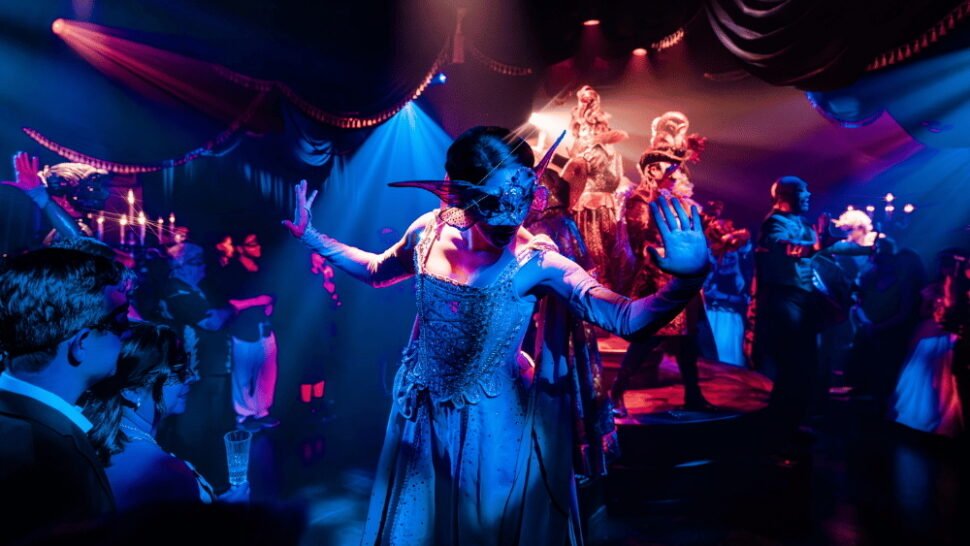
Suddenly the room explodes into golds and blues, the music and actors surge as if the walls themselves inhaled and exhaled light. The actors, adorned in ornate costumes, guide you into a ballroomesque space that feels impossibly colorful after the previous beige room. You are immersed in a world of opulence and splendor. You’ve crossed a threshold, and with it, your role in the world deepens.
Connection Between Actors and Audience: The Human Gesture of Immersion
Holding the world in your hands
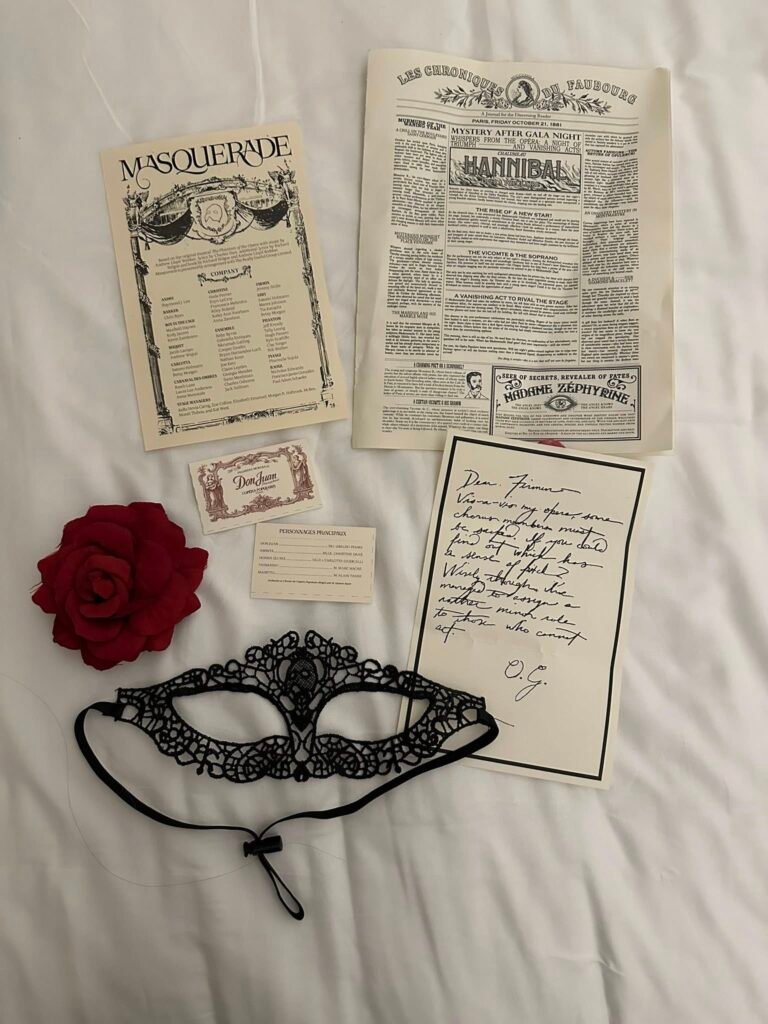
Arguably one of the most enchanting elements of Masquerade NYC, this immersive Phantom experience, is how tangible objects are used to anchor guests in the narrative. In no particular order, guests may receive:
- Roses to throw during Christine’s performance of “Think of Me.” It’s a tiny moment, but incredibly effective: a simple prop turns a crowd into an opera audience, heightening both emotional investment and theatrical realism.
- A small battery-operated candle to carry with you as you enter the Phantom’s lair. This transforms you from observer to participant; you are now illuminating the path, just as you follow Christine.
- Notes from the Opera Ghost as they are found by the characters throughout many points of the story.
- Tickets to the Don Juan opera, written by the Phantom and performed later in the experience.
Props aren’t merely decorative in immersive theater, they’re tools that transfer agency.
Even a single object in your hand can act to subtly shift you from “watching a story” to “living inside it.”
A Subtle touch to guide you
Another subtle but powerful technique Masquerade uses is how actors interact with guests. It’s never overwhelming, but always intentional.
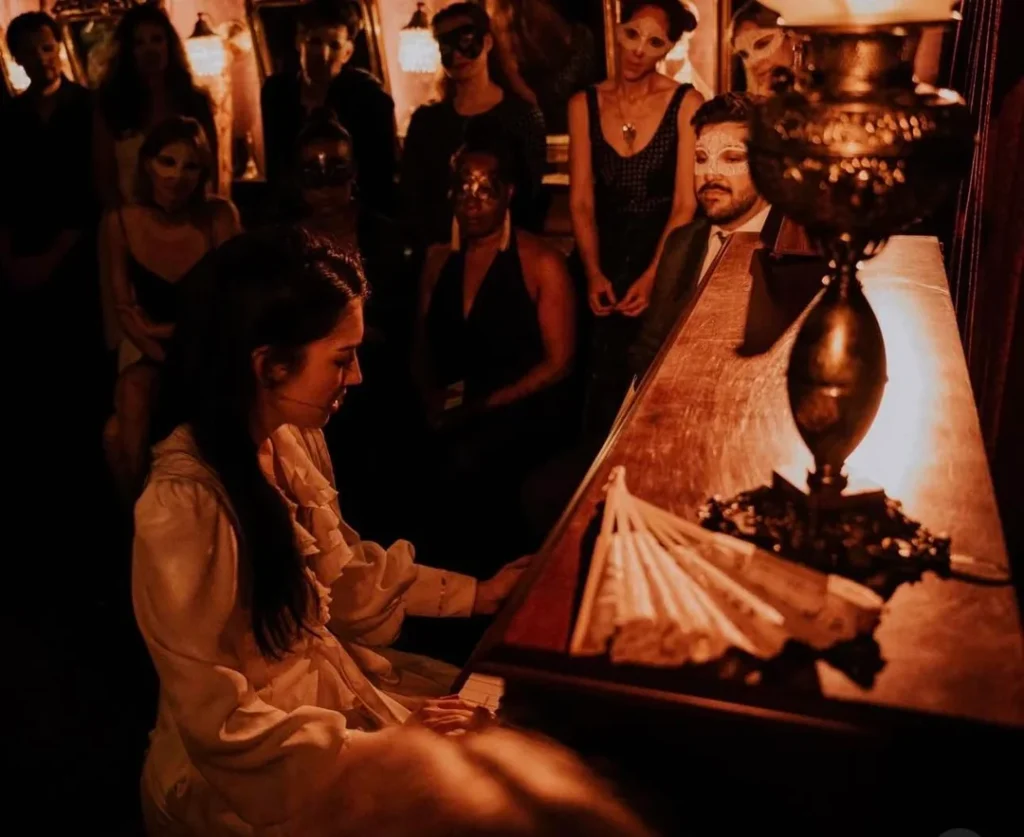
During the Masquerade sequence, the Phantom emerges from behind a curtain located directly behind the guests. As he passed behind me, he placed a hand lightly on my shoulder—a silent cue to make space. Another moment included having one of the guests play the piano for Christine’s performance of Think of Me. One of our Board of Advisor members was asked to play the role of the maestro, and with the magic of theater, he was able to play the song perfectly.
So if it is a dancer offering a palm, a performer brushing past in a narrow corridor, or a guiding hand on your back can reaffirm something essential: You exist in their world, and they acknowledge your presence.
This is the heart of immersion: the world looks back at you.
When the story recognizes you
Experiencing Masquerade NYC reminded me how powerful it is when a story actively recognizes the people inside it. Every threshold shift, every prop placed in a guest’s hand, every guiding touch—all of it reinforces the idea that you belong in this world. That’s the moment where observation transforms into participation. This is an interesting dynamic when you also view it “through the mask” the Phantom himself wears and the path from ostracization, to acceptance from Christine.
It’s a design principle that resonates deeply with us at Baker Street Mystery and shapes how we create our own immersive events.
Why Immersive Experiences Matter to Baker Street Mystery
Participating in experiences like Masquerade NYC directly influences the way we design our murder mysteries. At Baker Street Mystery, guests aren’t passive observers; they are characters with names, secrets, objectives, and relationships that evolve through interaction.
This approach reflects the same core principle seen throughout Masquerade NYC:
Immersion is most compelling when the world acknowledges the audience — when guests feel recognized, responded to, and woven into the fabric of the story.
Your choices shape alliances, drive conflict, uncover secrets, and ultimately determine the outcome. The narrative exists because you animate it.
Masquerade NYC demonstrates how transformative it can be when an experience treats its guests as integral to the world, and that is exactly what we strive to create at every Baker Street Mystery event.
You can read our perspective on the difference between interactive and immersive experiences.